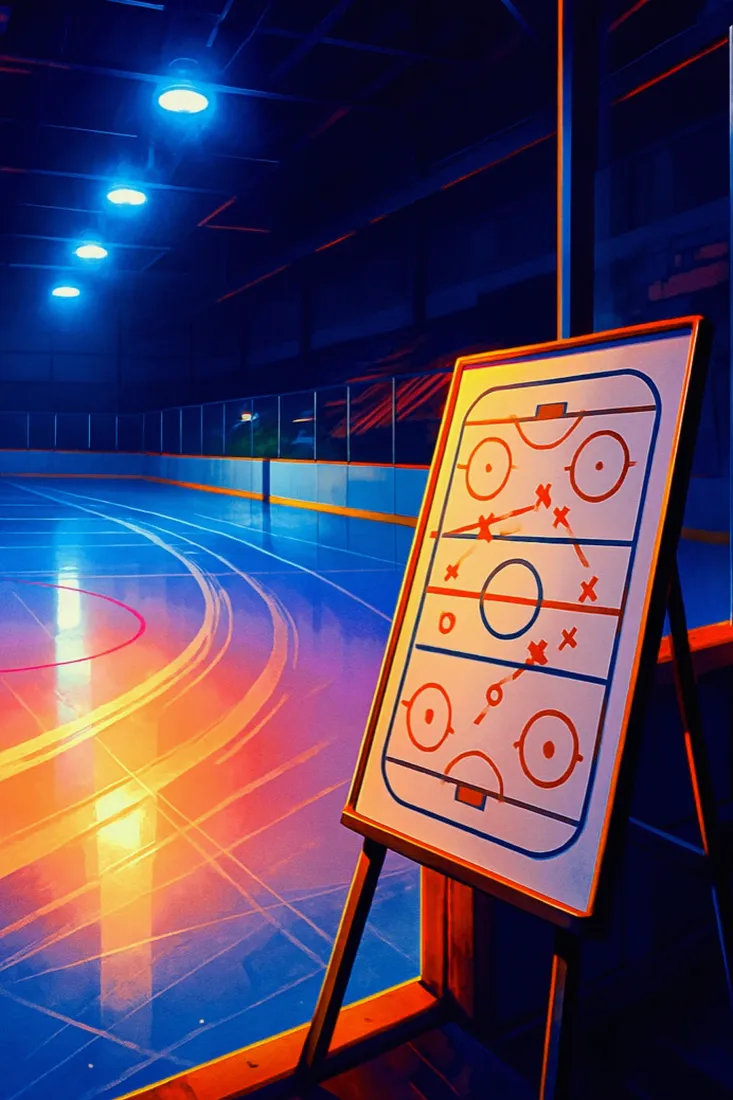
The first thing you notice about Hockey Arena is how little it shouts. There is no cinematic intro and no maze of menus. You get a club, a roster and a game tonight. The operator describes the interface as simple, and that is fair. After a decade of sports games that confuse complexity with depth, it is a relief to find one that trusts a few clear decisions to carry the load.
That simplicity is a choice, not a shortcut. Because a match is played every day, the game can afford to keep each individual decision small. No single setup decides a season. Instead you nudge, observe and nudge again. Over a few weeks, those small moves add up to a club that feels genuinely yours, shaped by the lines you trusted and the free agents you brought in.
The daily match as a teaching tool
A game every day changes how you learn. In a weekly manager, a bad decision can sit unnoticed for a month. Here, if you overplay a tired veteran or neglect your defence in training, the results tell you within days. We found ourselves keeping a tiny notebook of what we changed and what followed, which is the best sign a management game is working: it makes you curious about cause and effect.
The rhythm also suits a working schedule better than most. The match happens whether you are watching or not, so a manager can set things up at breakfast and check the score after work. You do not need to be online at a particular moment. That makes Hockey Arena one of the few games on our shelf that fits around a full-time job without any guilt.
Free agents with no strings attached
Hockey Arena calls its free-agent system unique and unrestricted, and in practice it is the most interesting lever in the game. Rather than waiting for a rival to accept a trade, you can go to the open market and sign players directly. For a struggling club, this is a lifeline. For an ambitious one, it is a temptation, because every signing has a cost that lands on the club’s books.
The skill is restraint. Early on we signed too eagerly, chasing a name that looked strong on paper, and spent the next stretch nursing the finances back to health. The rules are clear that the club’s balance matters, and a manager who ignores money will eventually run out of room to move. Treat the market like a grocery list, not a shopping spree, and it rewards you handsomely.
Training, money and the quiet middle of the season
Between the daily results sits the slower work: squad training and the club’s finances. Neither is complicated, which means neither is an excuse. Training choices show up gradually in your players, and the balance sheet tells you plainly whether your ambitions are affordable. This is the part of the game where patient managers pull ahead, because the payoff is weeks away rather than tonight.
It is also where Hockey Arena feels most honest about being a long game. There are no dramatic upgrades to unlock every few minutes. A season is built slowly, line by line and dollar by dollar. If you enjoy that slow build, the middle of the season becomes the best part. If you need constant fireworks, you may drift, and that is worth knowing before you sign up.
Leagues, divisions and the managers next door
Leagues are organized by country and by division, from the top tier down through several lower levels, and the public standings show how active each league is. That activity figure is worth a look. A busy division full of attentive managers makes every result feel earned, while a sleepy one can feel like playing against empty jerseys. We had a good experience in an active league and recommend seeking one out.
The community is there if you want it, through the message board and the steady presence of rival managers in the market. The game also expects fair play: one team per manager, and no arranged transfers that quietly favour a friend. Those rules keep the market honest, which matters more than you might think in a game where free agents are the main way to change your fortunes.
Hockey Arena from day one to day seven
- Register, look at your roster for ten minutes and resist changing anything until you have seen two or three daily results.
- Check your club’s balance before you visit the free-agent market, and set yourself a firm limit you will not cross this week.
- Pick one training focus, such as defence or scoring, and stick with it long enough to see whether it shows up on the ice.
- Read your league’s standings and note which rivals are active; they will be your competitors for signings all season.
- Make one considered free-agent signing at the end of the week, then write down why, so you can judge it honestly later.
What we love
- A result every day means you learn the game quickly through cause and effect.
- The unrestricted free-agent market gives every club a real path back from a slump.
- The interface is genuinely simple, so a short visit is enough to keep a club healthy.
- Lively divisions with visible activity make the standings feel competitive and earned.
What grates
- Visuals are plain, and managers wanting a showy match viewer may find it dry.
- Overspending in the market can tie your hands for a long stretch afterwards.
- Quieter divisions can feel lonely, so league choice really matters.
Who should pick up Hockey Arena
Hockey Arena is for the fan who wants hockey in their day without hockey taking over their evening. If you like small rituals, enjoy watching a plan work slowly and would rather read a result than watch a highlight, you will feel at home here. It also makes a fine first manager game for anyone new to the genre.
Final whistle on Hockey Arena
Hockey Arena does not try to be everything. It offers a daily match, a free-agent market that rewards restraint and a simple set of controls, then lets time do the rest. That restraint is its strength. We came back every day not because the game demanded it, but because we wanted to see whether yesterday’s small change had worked. For a free hockey manager, that is the highest compliment we can pay.